
Twelve Thousand Years Ago, Someone Was Already Making Art
Twelve thousand years ago, inside a cave in Bhimbetka, Madhya Pradesh, a painter stood with ochre-stained fingers and a hissing torch. The forest outside was absolute darkness. He could have painted animals or the hunt as painters elsewhere did. Instead, he painted people: a circle with hands linked, a drummer at the edge, and one figure caught mid-dance, bent in full movement. He was asking the question every artist eventually asks: how do you make a moment last?
At Bhimbetka, even now, as pigments fade and rock fractures, the structure is obvious. This is not primitive noise. This is organised rhythm, shared and intentional, beating in fire-lit circles long before history found words for it.
The Instrument That Proved Harappa Understood Music
By 3000 BCE, the Harappans were building cities, and inside those cities, someone was building sound. At Mohenjo-daro, archaeologists found a terracotta bird whistle. Fill it with water, blow into it, and it produces distinct, separate tones: not one tone, but multiple, deliberate ones.
Imagine a Harappan potter with firelight on his face, pressing five holes into wet clay with his thumbs, not for decoration and not for drainage, but each hole placed at a specific distance from the next, the way his grandfather taught him. Five thousand years ago, someone in the Indus Valley was experimenting with structured sound, even before any surviving language to describe it had been written down.
Bharata Muni Mapped the Octave 1,200 Years Before Western Theory Caught Up
The first time music became text, it was the Sama Veda, around 1000 BCE, the Veda of melody. The hymns of the Rigveda were set to tune, sung across three to seven notes during sacred ritual, and this was not casual singing: it was precise.
Then, around 200 BCE, a man named Bharata Muni sat down and did something extraordinary. He wrote the Natya Shastra, not a song collection but a complete theory. He divided the octave into twenty-two shrutis, subtle pitch divisions mapped with remarkable precision. From these twenty-two, he chose seven swaras. He described exactly how string length changes pitch. He named it, formalised it, and documented it over thousand years before Western music theory attempted the same.
The Sequence You Learned as “Fibonacci” Was Indian Mathematics Centuries Earlier
Imagine a music school during the Gupta era. A student pauses mid-rhythm, fingers still on the mridangam, and asks his teacher how many patterns he can make from one short syllable and one long syllable. His teacher tells him not to guess but to count. He does: one beat yields one pattern, two beats yield two, three yield three, four yield five, five yield eight, then thirteen. Each number comes from the two before it. The student asks, “Is this music or mathematics?” The teacher smiles and plays the answer on the mridangam.
This sequence was documented by the Indian scholar Pingala around 200 BCE, expanded by Hemachandra in 1150 CE, and published in Europe by Fibonacci in 1202, likely reaching him through Arabic transmission of Indian mathematical texts.
The British Told Indian Musicians Their Instruments Were Out of Tune
While the Italian monk Guido of Arezzo is credited with inventing “Do-Re-Mi” around 1000 CE, it is plausible that the seven swaras, documented millennia earlier, provided the foundational blueprint for Western musical notation.
In India, until Sharanga Deva’s thirteenth-century work Sangita Ratnakara, there was one unified musical tradition. The split into Karnatak and Hindustani came later, but both share the same fundamental structure, the same mathematical ratios, the same understanding of shrutis and swaras.
Then came the British. Indian musicians, working within twenty-two shrutis, were told their instruments were out of tune. They were told that sophistication meant twelve equal notes arranged neatly across a keyboard, and that anything outside that grid was error. The twenty-two shrutis that Bharata Muni had mapped two thousand years earlier were dismissed as mistake. Indian musicians began looking to London for validation. Ancient ragas, complex mathematical structures that took lifetimes to master, started receding.
Devadasis, Tawaifs, and the Courage That Kept a Civilisation’s Music Alive
As empire tightened its grip, India’s classical traditions survived not in institutions but in the hands of women. Devadasis in the South carried Bharatanatyam and Carnatic music through temple ritual and courtly performance, guarding forms that colonial reformers tried to extinguish.
In the North, Tawaifs or courtesans became the beating heart of Hindustani classical music: thumri, dadra, and Kathak. With courts dissolving under British rule, their kothas evolved into vibrant academies where artistry was honed and debated. Yet Victorian reformers recast both Devadasis and Tawaifs as prostitutes, pushing them out of public respectability and nearly erasing their cultural legacy.
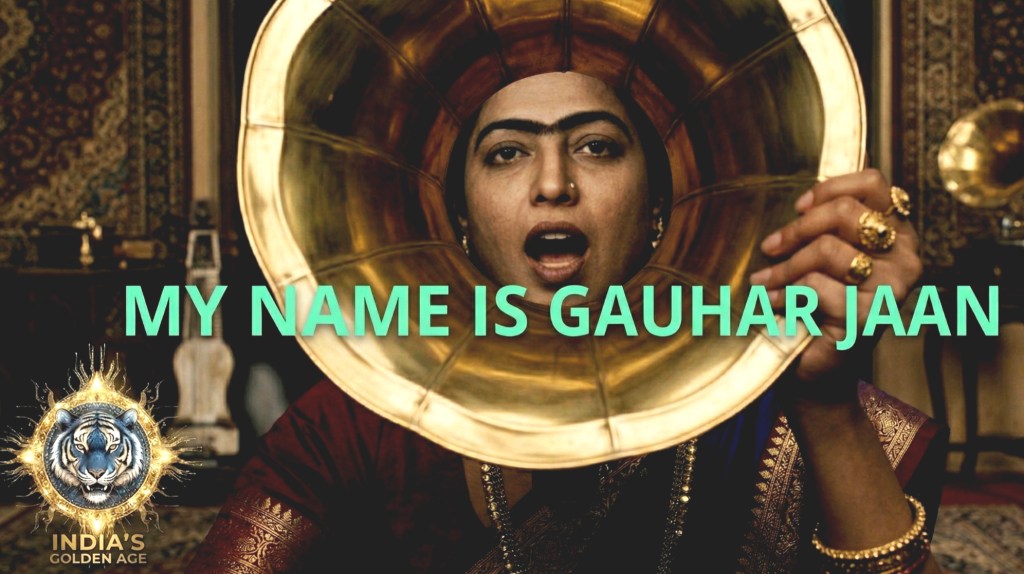
In 1902, Gauhar Jaan, a courtesan, walked into a Calcutta recording studio and faced British engineers and their new machine. She sang. But more importantly, she announced into the recording horn: “My name is Gauhar Jaan.” She did not leave her legacy to chance. She told history her name herself. These women, despised by some, saved Indian music tradition that the colonial empire tried to erase. That is simply the truth.
What India’s Musical History Teaches Us Today
India’s musical story is not a relic. It is a living argument, and it carries urgent lessons for the present.
The first lesson is about attribution. Pingala documented the Fibonacci sequence roughly 1,400 years before Fibonacci. Bharata Muni mapped the octave centuries before Western music theory formalised it. The consistent pattern of Indian intellectual contributions being absorbed, renamed, and returned to India as foreign imports is not ancient history; it is a structure of knowledge politics that persists today. Being aware of it is the beginning of correcting it.
The second lesson is about who carries culture in moments of crisis. It was not kings, academies, or institutions that preserved India’s classical traditions during colonialism. It was Devadasis and Tawaifs, women who were simultaneously celebrated for their artistry and condemned for their social position. Any serious conversation about cultural preservation in India today must reckon honestly with who does the actual preserving, and whether those people receive the recognition and protection they deserve.
The third lesson is about confidence versus validation. When British administrators told Indian musicians that their twenty-two shrutis were out of tune, a generation looked to London to tell them whether their own tradition was valid. That instinct, of seeking external approval for internal knowledge, is one that contemporary India can consciously choose to set aside. The mathematics of the Natya Shastra does not require a Western endorsement to be correct.
And the fourth lesson is Gauhar Jaan’s. When she announced her name into a recording horn in 1902, she understood something that is still worth understanding: if you do not tell your own story, someone else will tell it badly. India’s musical continuum, from Bhimbetka’s painted walls to Lata Mangeshkar’s voice, is visible if we are willing to see it. The question is simply whether we choose to look.
The article is an excerpt from my podcast – India’s Golden Age. Available on YouTube, Spotify, Apple Podcasts and other Podcasting Platforms.
 Sarvajeet D Chandra
Leave a comment