
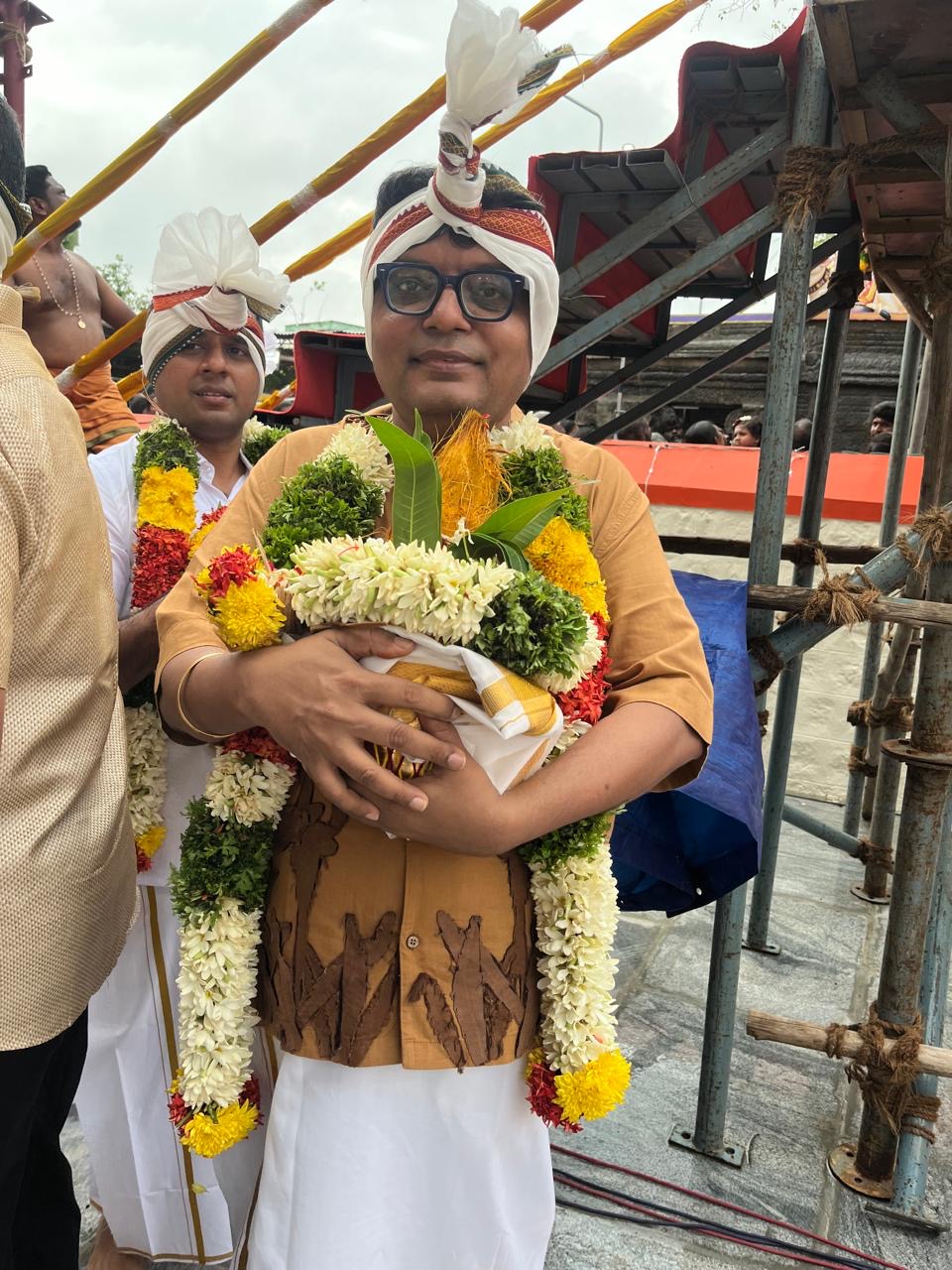
Last weekend I was involved in the Kumbhabhishekam, the installation of Ganesha, in the ancient village of Vishwanathpuri, near the city of Karur in Tamil Nadu. The ‘Lord of New Beginnings’, I hoped, would bring a fresh start for a sleepy village, notorious for police raids for illicit country liquor. For most of the villagers, Vinayaka was the preferred name of the deity, and my mind drifted to the horrific things that name connoted in very early times.
The ceremony was a hectic, noisy two-day affair. On the first day, the women of the VNC family fetched sacred Cauvery water in pots, and the next day the men of the VNC family carried the same pots to anoint the deity. While researching my novel Dhruvadevi, about the forgotten Gupta queen, I had come across how Vinayaka metamorphosed into Ganesha. The composite Ganesha we know today took shape during or perhaps just after the Gupta period.
For most people Ganesha, Vinayaka and Ganapati are the same deity, but the three names carry different associations in my head.
Vinayaka began as a group of troublemaker spirits, four of them in the Manava Grihyasutra. They would cause madness, create obstacles to success and rituals, and possess people. To ensure a trouble-free conclusion of tasks and to preserve sanity, they had to be appeased with offerings of meat, wine, fish etc. kept at crossroads. A village which knew its country liquor wouldn’t have trouble arranging for these offerings.
The chanting reached a feverish pitch and a few key members of the family climbed a staircase to the sky to anoint the shikara, the top of the temple. My mind turned to how the Vinayakas had merged into a composite deity and, in time, into Ganesha. The Yajnavalkya Smriti, from the early centuries CE, records that the troublemakers were integrated into a composite whole, the Vinayaka, the chief troublemaker, the Vighna-karta. It prescribes a ritual of Vinayaka-shanti to keep him in good humour. In the later Puranic tradition Vinayaka’s role expands further. He becomes the Ganapati or the leader of the ganas: boisterous, grotesque, alien-like attendants of Shiva.
As the reed-shaped nadaswaram swelled and the thavil, a barrel-shaped drum, pounded towards a crescendo, I thought of a Puranic masterstroke, in which this fierce and unruly Vinayaka changed from a troublemaker to a trouble-remover (Vighna-harta), taking on a refurbished identity and role as Ganesha. The earliest images of Ganesha date from the 5th century, at sites such as Udayagiri and Bhumara. The Puranas tell the story of his birth in several versions, with Parvati, Shiva or both creating him. The best-known version is from the Shiva Purana wherein Parvati creates a boy from the dirt of her body, Shiva beheads him and then replaces the head with an elephant’s. With this backstory, the troublemaker Vinayaka who lived on the fringes became a mainstream deity, the benevolent Ganesha, the Lord of New Beginnings. It was a remarkable repositioning exercise with the Puranas being used again, not surprisingly, as a powerful instrument of change.
All these thoughts passed through my head as I offered a pot filled with holy Cauvery water to the priest who anointed a secondary deity. Eventually the procession was in the sanctum sanctorum, where the rest of the VNC family members offered their pots of water to anoint the chief deity, the Vinayaka or Ganesha.
I looked at the newly installed deity’s face and felt a surge of reassurance and hope. There was a palpable optimism in the air, a hope for a fresh start, amongst the devotees whose hearts were beating with a newfound joy. It seemed as if a weight had been lifted off their shoulders, and the days, like rain clouds in the dark Karur sky, carried promises of a bountiful future.
My mind recalled the obstacle-ridden, almost malevolent Vinayaka, the leader of pot-bellied, deformed and ugly beings. Indeed, only Vinayaka, who was powerful enough to create obstacles, had the ability to remove them as Ganesha. It is no coincidence that the elephant deity rides a mouse: the restless, nibbling, ever desiring manifestation of human ego.
The deity had not slain the mouse, or locked it away. He had not banished our desires, nor covered up our ugliness. He had just steered and weaponised this erratic desire, this desire that has led to a lot of civilisational advancement and degradation at the same time.


Leave a Reply